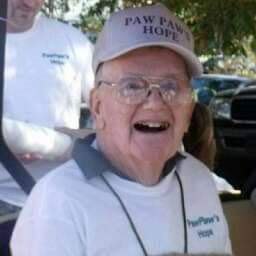
My Daddy was diagnosed in February 2009 and lived 15 months with this horrible disease. He was still able to walk and talk but ended up having trouble swallowing. He never complained. I’ve supported the Tennessee Chapter of the ALS Association since 2010 when he passed and will continue to do so because it was a promise to my Dad. Love, Team Paw Paw’s Hope Fishin To Cure ALS.
My Daddy was diagnosed in February 2009 and lived 15 months with this horrible disease. He was still able to walk and talk but ended up having trouble swallowing. He never complained. I’ve supported the Tennessee Chapter of the ALS Association since 2010 when he passed and will continue to do so because it was a promise to my Dad. Love, Team Paw Paw’s Hope Fishin To Cure ALS.
It is so important that Congress increase ALS research funding! I have been doing all I can to help with research. I am currently involved in two research studies. I have been to the NIH 3 times to contribute to research projects.
We need support to find treatments to slow the progression of ALS and a cure. Far too many people have died from ALS over the centuries it has been around. I have lost 3 family members and now it is my time to deal with ALS.
We need support to put an end to this disease.
It is so important that Congress increase ALS research funding! I have been doing all I can to help with research. I am currently involved in two research studies. I have been to the NIH 3 times to contribute to research projects.
We need support to find treatments to slow the progression of ALS and a cure. Far too many people have died from ALS over the centuries it has been around. I have lost 3 family members and now it is my time to deal with ALS.
We need support to put an end to this disease.
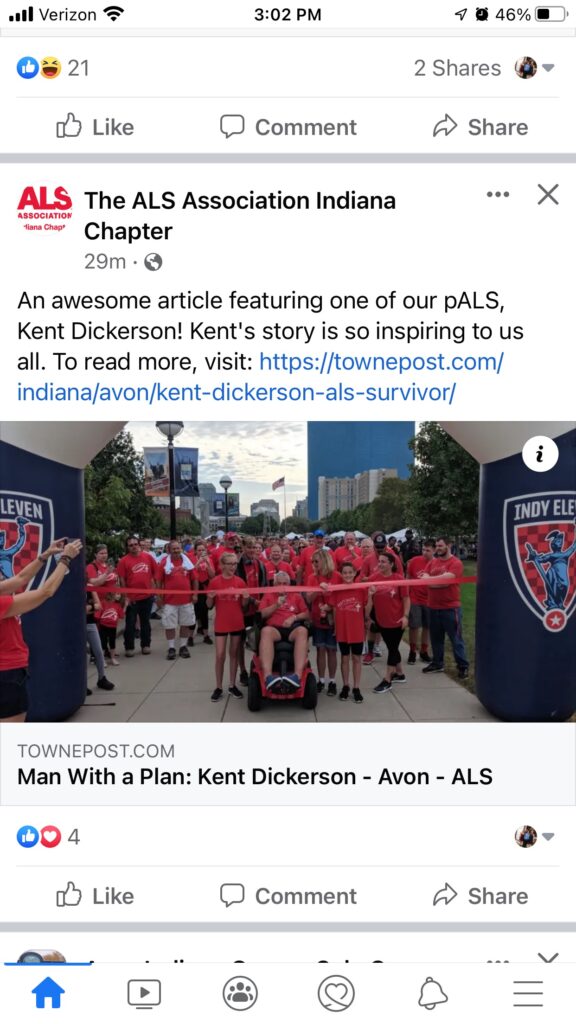
My name is Kent Dickerson. Having ALS is terrible, but I try to bring awareness to the disease and fundraising for people who need things to live a life with ALS and for ALS research. This will be our 13th walk this year.
Set up with ALS Association, the “Kent Dickerson Ring of Honor” is a long-term commitment to help others with grants for needs.
Enjoy talking to people who after being diagnosed are having trouble coping with it. I did an ice bucket challenge in 2014, and we went through 6 TONS of ice. I attend a lunch once a month that started with 6 people in May and has grown to 20 in August. What a wonderful time to be together with people going through the same thing you are. I am staying positive and trying to make an impact on others.
My name is Kent Dickerson. Having ALS is terrible, but I try to bring awareness to the disease and fundraising for people who need things to live a life with ALS and for ALS research. This will be our 13th walk this year.
Set up with ALS Association, the “Kent Dickerson Ring of Honor” is a long-term commitment to help others with grants for needs.
Enjoy talking to people who after being diagnosed are having trouble coping with it. I did an ice bucket challenge in 2014, and we went through 6 TONS of ice. I attend a lunch once a month that started with 6 people in May and has grown to 20 in August. What a wonderful time to be together with people going through the same thing you are. I am staying positive and trying to make an impact on others.
11 years ago my mom was diagnosed with ALS. I was 19 years old at the time and had no idea what this meant. I knew things were going to change, but didn’t know exactly how. Over the past 11 years I’ve watched the horrible disease impact many of my mom’s fundamental life skills. Her walking, speech, and energy have diminished, and she has lost her ability to do things she once loved to do. But one thing I admire about my mom is no matter what, she keeps pushing. She is the strongest woman I’ve ever met and she won’t let ALS get in her way. There is a Peloton instructor, Kendall Toole, who has a saying that really resonates with me. She says, “They can knock you down, but never let them knock you out.” Every time I take one of Kendall’s classes and hear this saying, I think of how ALS can impact my mom in so many ways, but she will never stop fighting. And I know that my family and I will never stop fighting with her.
11 years ago my mom was diagnosed with ALS. I was 19 years old at the time and had no idea what this meant. I knew things were going to change, but didn’t know exactly how. Over the past 11 years I’ve watched the horrible disease impact many of my mom’s fundamental life skills. Her walking, speech, and energy have diminished, and she has lost her ability to do things she once loved to do. But one thing I admire about my mom is no matter what, she keeps pushing. She is the strongest woman I’ve ever met and she won’t let ALS get in her way. There is a Peloton instructor, Kendall Toole, who has a saying that really resonates with me. She says, “They can knock you down, but never let them knock you out.” Every time I take one of Kendall’s classes and hear this saying, I think of how ALS can impact my mom in so many ways, but she will never stop fighting. And I know that my family and I will never stop fighting with her.
15 years ago my Dad was a vigorous and athletic man. Then the weakness set in, and his muscle control deteriorated. The disease took him in two years, by which point he was unable to breathe let alone move by himself. His body had atrophied to an unimaginable extent. After completing a grueling final semester at college came home for his remaining one and a half years to help my Mom take care of him and to be a witness to everything that transpired. I’m glad I did, but I’ve carried the scars of that experience ever since and know that few people can understand what we went through. That said I know that this ‘rare’ disease is anything but, and it’s no small consolation knowing that major advances are continually being made to improve the duration and quality of life for those afflicted, and have hope for much more to come.
15 years ago my Dad was a vigorous and athletic man. Then the weakness set in, and his muscle control deteriorated. The disease took him in two years, by which point he was unable to breathe let alone move by himself. His body had atrophied to an unimaginable extent. After completing a grueling final semester at college came home for his remaining one and a half years to help my Mom take care of him and to be a witness to everything that transpired. I’m glad I did, but I’ve carried the scars of that experience ever since and know that few people can understand what we went through. That said I know that this ‘rare’ disease is anything but, and it’s no small consolation knowing that major advances are continually being made to improve the duration and quality of life for those afflicted, and have hope for much more to come.